Answer
Nov 10, 2025 - 09:58 AM
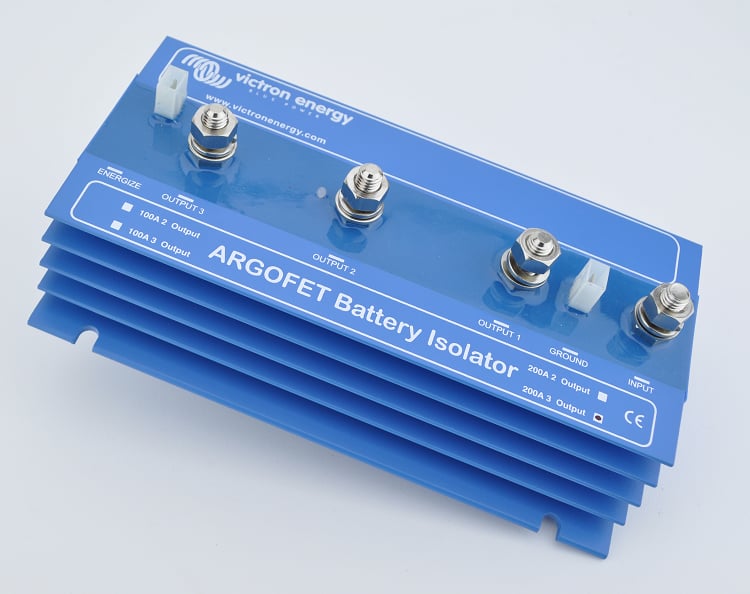
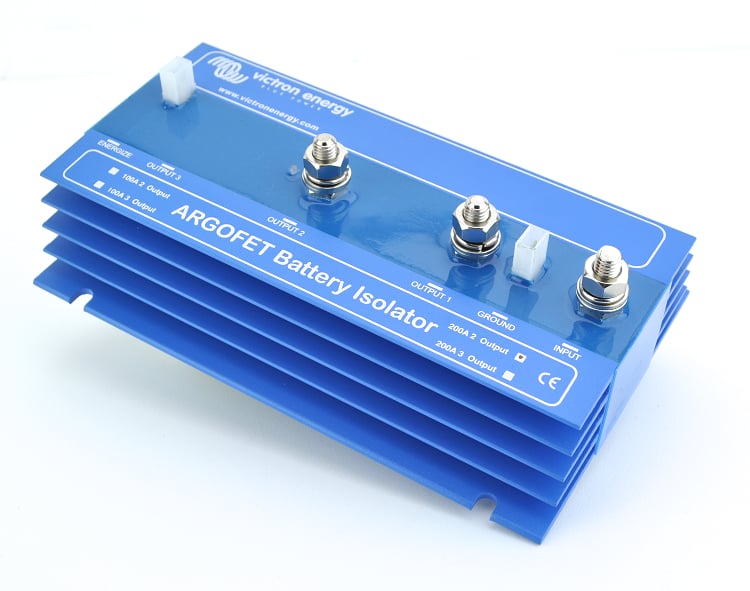
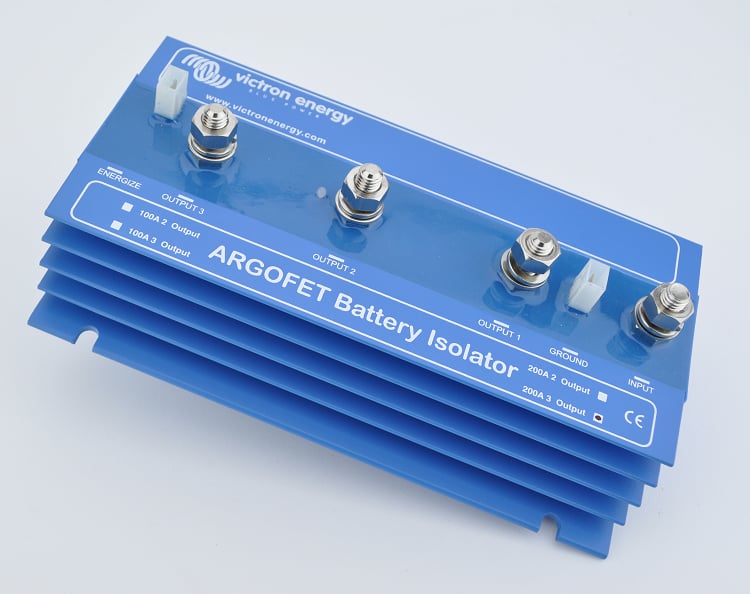
The main difference between the two types of isolators is the amount of voltage drop (power loss) they create. "Standard Isolators" typically refers to Diode-Based Isolators, while FET Isolators (Field-Effect Transistor) use advanced solid-state technology to virtually eliminate this power loss.
Comparison: FET Isolator vs. Diode Isolator
| Feature | FET (Field-Effect Transistor) Isolator | Standard (Diode-Based) Isolator |
| Technology | Advanced solid-state semiconductor switches (FETs). | Simple semiconductor diodes. |
| Voltage Drop | Virtually None (typically < 0.2 Volt at high current). | Significant (typically 0.6 to 1.0 Volt). |
| Charging Efficiency | High. Batteries receive almost the full alternator voltage, leading to faster, more complete charging. | Lower. The voltage drop can prevent batteries from reaching a 100% state of charge. |
| Heat Generation | Minimal, though cooling fins may still be used for high-amperage units. | Generates more heat due to power loss across the diodes. |
| Cost | Generally Higher. | Generally Lower. |
| Alternator Adjustment | Usually not required. | Often required to increase the alternator's output voltage to compensate for the drop. |